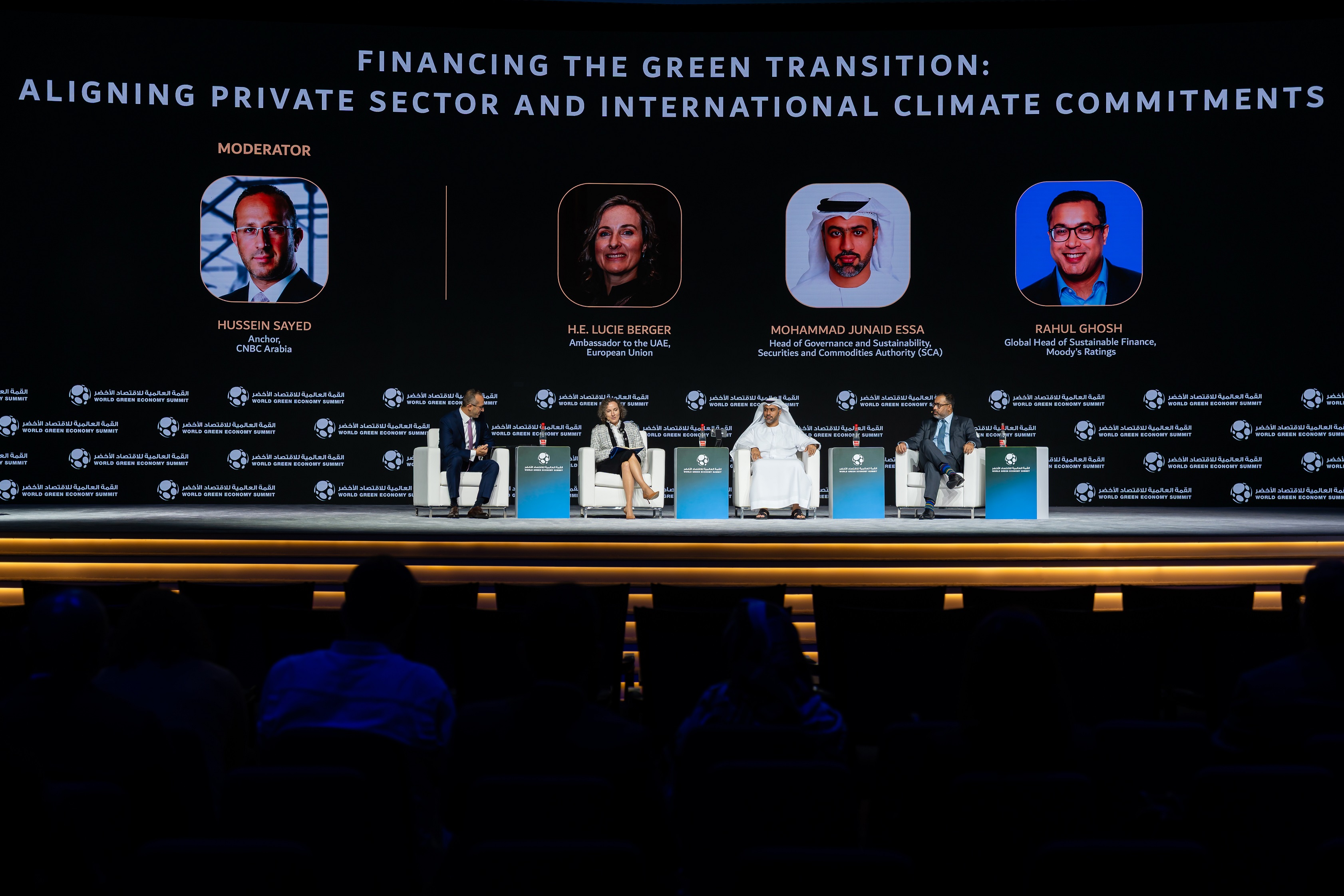


Dubai to host 12th World Green Economy Summit on 21–22 October 2026
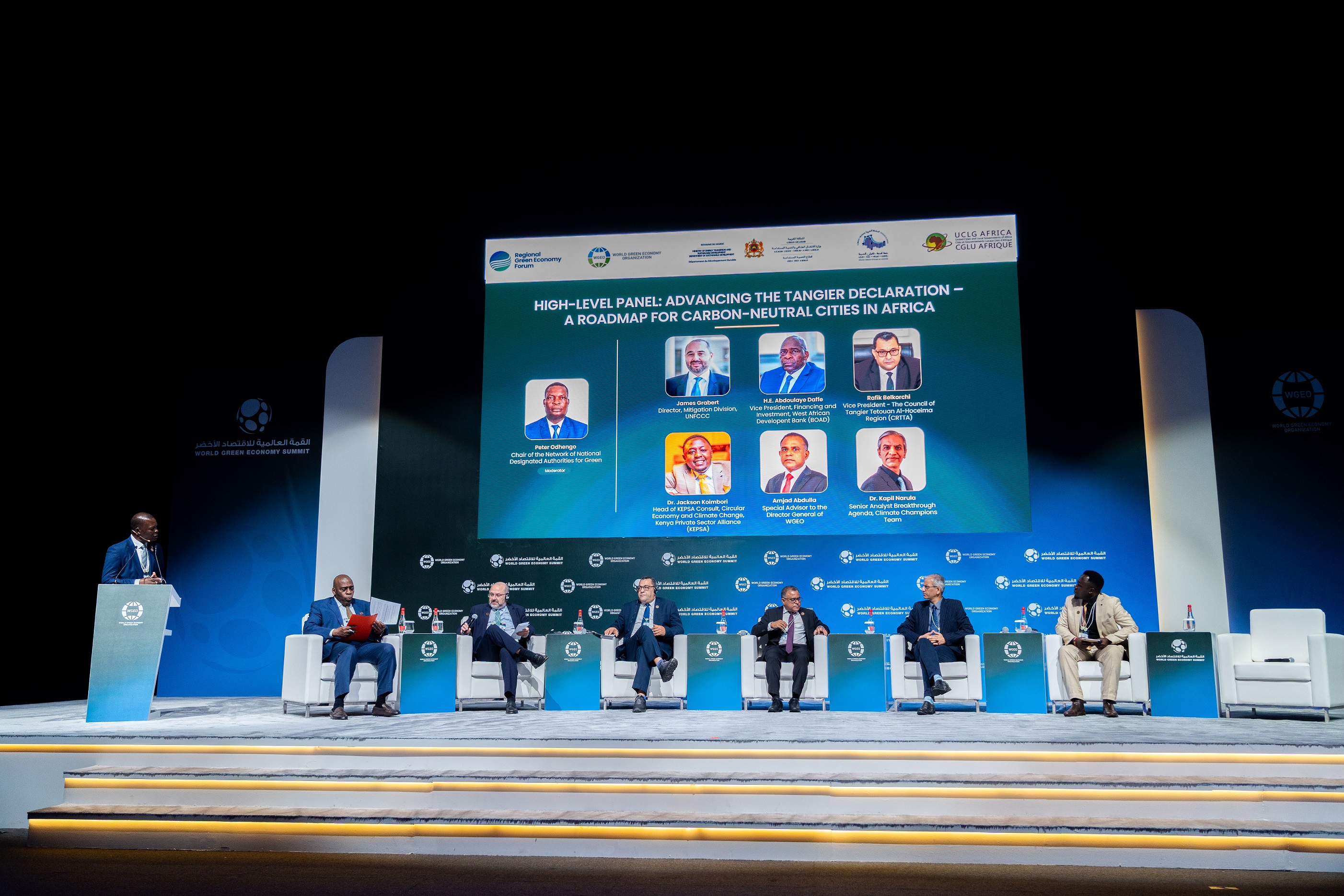
Under the patronage of HH Sheikh Mohammed bin Rashid Al Maktoum, Vice President and Prime Minister of the UAE and Ruler of Dubai, the Dubai Supreme Council of Energy, Dubai Electricity and Water Authority (DEWA) and the World Green Economy Organization (WGEO) will organise the 12th World Green Economy Summit (WGES) on 21 and 22 October 2026 at the Dubai World Trade Centre. The summit will bring together officials, decision makers, infrastructure developers, business leaders, resilience experts and project financiers to highlight experiences that have proved successful and the factors needed to scale them.
This year’s theme, ‘From Success to Scale: Showcasing the Green Economy’, carries practical significance that goes beyond celebrating success stories. Technologies that were experimental a few years ago have developed into large commercial projects in solar and wind power, batteries, electric vehicles and energy efficiency, while other solutions are rapidly moving towards economic viability at greater scale. At this stage, the key questions concern speed of implementation, cost of capital, infrastructure readiness, policy maturity, the availability of skills and supply chains, and the ability of successful projects to attract the financing required to replicate them across different markets. The World Economic Forum (WEF) notes that, on average, companies generating revenues from green markets are seeing those revenues grow twice as fast as those from conventional business lines. Companies with green revenues also typically benefit from a lower cost of capital, while those generating more than half their revenues from green markets often enjoy valuation premiums of 12% to 15% in capital markets, reflecting investor confidence in their long-term resilience and sustainable profitability.
Scaling solutions
“The world today has a substantial base of successful models and viable solutions that have demonstrated their ability to support economic development, reduce emissions and enhance resource efficiency. The priority for the next phase is to scale these solutions and accelerate their implementation by strengthening partnerships between governments, the private sector and financial institutions, and developing regulatory and financing frameworks that stimulate investment and enable innovations to be transformed into practical, scalable projects. The UAE and Dubai demonstrate how visions and strategies can be translated into tangible projects and achievements. WGES 2026 provides a global platform for exchanging expertise and connecting capital with technology and promising projects, supporting the development of a greener economy that is more resilient, competitive and sustainable,” said HE Saeed Mohammed Al Tayer, Vice Chairman of the Dubai Supreme Council of Energy, MD & CEO of DEWA and Chairman of WGEO.
Al Tayer noted that the global green economy has surpassed USD 5 trillion in annual value, making it one of the world’s fastest-growing sectors after technology, while projections indicate that its value will exceed USD 7 trillion by 2030. At the same time, the pace of climate finance remains well below the level required to match stated ambitions. This shifts the priority from demonstrating that green solutions can succeed to identifying ways to scale and finance them and replicate viable models across different economies, sectors and markets.
Four pillars define the pathway to scaling
WGES addresses this challenge through four interconnected main thematic pillars: Energy Technology & Infrastructure, Business Strategy & Transition, Water & Food Security and Finance. These are complemented by three cross-cutting themes that affect all sectors: Artificial Intelligence (AI), Governance and System Enablers: Supply Chains & Circular Economy. This structure gives the scaling discussion a dimension that extends beyond technology itself. Transitioning to a green economy at scale requires infrastructure capable of accommodating growth, organisations that view sustainability as a source of value, finance that turns projects into investable assets, and economic systems capable of providing the materials, skills and services required to sustain that growth.
The Energy Technology & Infrastructure pillar examines the evolution of global energy demand amid increasing electrification, industrial growth and the rapid expansion of AI-driven data centres, alongside the rapid deployment of clean power and the importance of energy storage in strengthening the reliability of renewable energy systems. Discussions also address emerging technologies, from green hydrogen to nuclear energy, and their role in building the diversified, low-carbon energy mix required to meet the needs of economies that are becoming increasingly electrified and digitalised.
These issues are gaining importance as the regional transition accelerates. Operational renewable energy capacity in the Middle East and North Africa (MENA) reached 43.7 gigawatts (GW) by the end of 2025, an increase of 13.4 GW in just one year, representing growth of around 44%. Solar photovoltaic (PV) capacity accounted for 34.5 GW of the total, alongside 7.4 GW of wind capacity. Meanwhile, the project pipeline reached around 202 GW, up 54% from the previous year. These figures show that the region now has an established base of operational projects, as well as a development pipeline that could fundamentally reshape the renewable energy market if announced projects proceed according to their targeted schedules.
Regional experience also demonstrates how falling technology costs have become an enabler of scaling. The MENA Energy Outlook 2026 highlights record-low prices for electricity generated from solar and wind projects in the region, alongside rapid growth in batteries and storage projects. This aligns with a broader global trend: the WEF estimates that the cost of solar PV and lithium batteries has fallen by around 90% since 2010, bringing a significant share of decarbonisation solutions into the realm of direct commercial competitiveness.
From green ambition to sustainable growth
WGES 2026 will showcase practical experiences from around the world, focusing on ways to translate environmental ambitions into measurable actions and tangible outcomes, while scaling up solutions that deliver environmental and economic benefits. Ahead of the summit, speakers emphasised that accelerating the transition to a green economy requires integrating sustainability into policies, economic development and decision-making, as well as leveraging innovation, data and effective partnerships to enhance competitiveness and resilience and create new opportunities for sustainable growth.
Aisha Al Abdooli, Director of Green Development and Environmental Affairs at the Ministry of Climate Change and Environment, said: “The transition to a green economy is no longer only about setting ambitious targets; it is about turning ambition into measurable action and tangible outcomes. In the UAE, we are working to embed sustainability across policy, economic development and decision-making, supported by innovation, robust environmental data and strong partnerships across government, the private sector, academia and international organisations. As environmental and economic priorities become increasingly interconnected, our focus must be on solutions that deliver multiple benefits – strengthening climate action, improving air quality, advancing circularity, protecting natural ecosystems and creating new opportunities for sustainable growth. The World Green Economy Summit provides an important platform to bring these perspectives together, exchange practical experiences and build partnerships that can accelerate implementation. I look forward to contributing to this dialogue and sharing how the UAE is translating its green growth ambitions into practical approaches that support competitiveness, resilience and a better quality of life for current and future generations.”
The green economy proves its commercial viability
The Business Strategy & Transition pillar presents companies with a different question: how can sustainability move from standalone programmes to become integral to growth strategy? Discussions at WGES will explore how organisations can capture valuation premiums, redesign business models around circular principles, address the green skills gap and navigate the rapidly evolving landscape of trade policies and carbon regulation, with a focus on the factors that distinguish organisations capable of leading and scaling the transition.
WEF analysis indicates that sectors such as solar and wind power, batteries and electric vehicles have reached advanced levels of maturity and competitiveness. Meanwhile, carbon and methane management, agriculture and land use, the circular economy and waste management are expected to record some of the fastest growth rates through to the end of the decade. In another report published in March 2026, the WEF identified more than 50 investible opportunities across 13 sectors that can generate revenues or direct cost savings for businesses. This demonstrates how the concept of the green economy is expanding to encompass business models and opportunities well beyond the energy sector.
Syed Adeel Abbas, Regional Climate Lead for the Middle East, North Africa, Afghanistan and Pakistan at the World Bank, said: “Mobilising private capital at the scale needed for climate and development remains one of the defining challenges of our time. Across the Middle East and North Africa region and beyond, growing interest in green bonds and other sustainable finance instruments is helping connect investors with opportunities that support both economic transformation and climate objectives. The World Green Economy Summit provides an important platform to exchange experiences, showcase innovations and discuss practical steps to strengthen green finance ecosystems across the region. I look forward to exchanging perspectives with policymakers, financial institutions and market participants on how green finance can support resilient and inclusive economic growth in the years ahead.”
Water and food move to the heart of the economy
The Water & Food Security pillar adds another dimension to the concept of scaling, as water and food have a direct impact on economies, supply chains, social stability and the ability to adapt to climate change. The summit explores how technology and infrastructure can transform some vulnerabilities in these two sectors into strategic capabilities, including through the decarbonisation of water production, a stronger water-energy nexus, expanded precision agriculture and the development of climate-adapted food systems. The discussions also consider climate resilience a long-term investment linked to economic stability, food security and sustainable growth.
International institutions are also moving towards broader implementation models. The 2025 annual report of the World Bank Group’s 2030 Water Resources Group (WRG) focused on shifting from dialogue to the delivery of scalable, investable solutions, drawing on models that bring together institutional reform, policy, digital systems and finance. Recent experience in irrigation, water reuse, wastewater treatment and blended finance demonstrates how public-private partnerships can transform individual water projects into broad national programmes.
Finance determines the pace of scaling
Finance is one of the most critical factors in determining the pace of scaling. Global climate finance surpassed USD 2 trillion for the first time in 2024, with the Climate Policy Initiative (CPI) estimating it at about USD 2.1 trillion in 2025. However, the annual growth rate of flows has slowed sharply, from 30% in 2021 to 6% in 2024 and an estimated 2% to 3% in 2025. CPI notes that sustained double-digit annual growth is needed to reach levels consistent with climate goals.
The composition of these flows also reveals important shifts. More than USD 1.7 trillion, or around 85% of climate finance in 2024, was mobilised through domestic markets, while private flows exceeded USD 1.2 trillion. Commercial financial institutions more than doubled their financing between 2019 and 2024 to reach USD 572 billion, while households invested USD 332 billion in low-carbon solutions including electric vehicles, heat pumps and small-scale renewable energy projects. These figures show that scaling climate finance increasingly depends on the ability of domestic markets, banks, investors and individuals to participate alongside public and international finance.
At least USD 6.3 trillion in annual climate investment will be required from now until 2030 to avoid the worst effects of climate change. Finance pillar sessions will examine how to address the persistent gap between available capital and bankable projects through blended finance structures, green bonds and innovative instruments, alongside real-world cases demonstrating the long-term economic value of climate investments. The discussion focuses on using public finance more effectively to attract private capital and reduce risk, enabling viable projects to be replicated in markets facing higher financing costs or greater risks.
Joan Larrea, CEO of Convergence Blended Finance, said: “The World Green Economy Summit is an important opportunity to strengthen the partnerships needed to finance green growth in emerging markets. The Gulf economies have a particularly important role to play, combining deep investment expertise, significant pools of private capital and philanthropic resources with a growing commitment to sustainable development. Blended finance can help harness these strengths, bringing public, private and philanthropic actors together to address investment barriers and support green solutions at scale. I look forward to exploring how we can translate the region’s financial strength and expertise into greater impact globally.”
AI, governance and supply chains
The cross-cutting themes of Artificial Intelligence, Governance and System Enablers intersect with all four main pillars because scaling the green economy depends on the efficiency of the entire system. WGES examines AI’s dual role. AI enables smarter energy management, predictive analytics for environmental risk mitigation, improved emissions monitoring and enhanced agricultural productivity. At the same time, data centre growth is raising demand for electricity and water, making the efficiency of digital infrastructure an essential part of assessing AI’s impact on the green economy. Discussions will explore the conditions under which AI can become net-positive force for the green economy, from improving data-centre energy efficiency to deploying AI-driven grid optimisation at scale.
Governance provides the framework that translates goals into investment and implementation decisions. The summit will examine how legislation, carbon markets, trade policies and international climate agreements influence the transition, alongside the practical implications of the implementation of the EU’s Carbon Border Adjustment Mechanism (CBAM) from 2026. This is particularly relevant for emissions-intensive sectors such as aluminium, steel, cement and petrochemicals, whose competitiveness is increasingly linked to their carbon content and their ability to demonstrate emissions reductions across value chains.
Closely linked to this is the transformation of supply chains and the circular economy. Scaling is not limited to increasing the production of green technologies; it also requires the materials, components, services and infrastructure needed to support them, while reusing resources in ways that reduce dependence on primary materials. This provides opportunities in areas such as battery recycling, industrial water management, material recovery and the design of reusable products, combining lower environmental impact with the creation of new economic value.
Dubai: a model for turning plans into scalable projects
Organising WGES in Dubai reflects the vision of the wise leadership that has made the green economy an integral part of the UAE’s development strategies. The country launched the UAE Green Growth Strategy with the ambition of consolidating its position as a global leader in the green economy and a hub for green products and technologies, while the UAE’s Green Agenda 2030 provides a long-term framework for making the economy more sustainable through programmes and initiatives spanning energy, investment, transport, resources and innovation.
Dubai provides practical models of phased scaling in green solutions, led by the clean energy projects implemented by DEWA under the Dubai Clean Energy Strategy 2050 and the Dubai Net Zero Carbon Emissions Strategy 2050. Clean energy currently accounts for more than 21.5% of DEWA’s total production capacity, while the current production capacity of the Mohammed bin Rashid Al Maktoum Solar Park has reached 3,860 megawatts (MW) and is set to exceed 8,000MW by 2030, surpassing the original target of 5,000MW. This is an example of how projects can scale as technology costs decline, financing models evolve and the capacity to implement larger projects increases.
WGEO extends the summit’s reach beyond local projects by connecting governments, institutions, the private sector and international organisations through platforms for collaboration, capacity building and green economy development. This role reinforces Dubai’s position as a meeting point for implementation, financing and policy experience, allowing the summit to move beyond presenting broad trends to examining the practical factors that determine whether a successful model remains an individual project or develops into a broad market.
How models can be scaled and replicated
WGES 2026 sessions will address these issues across the summit’s different pillars, bringing discussions on energy and infrastructure together with questions of investment and business models, linking water and food security to finance and technology, and placing AI, governance and supply chains within a common framework. Each year, the summit attracts more than 3,300 attendees from more than 30 countries, alongside 80-plus international speakers, including ministers, CEOs and innovators, and over 300 media representatives from regional and global outlets. This creates a space that brings together entities capable of making decisions with those that possess technology, capital or implementation expertise.
The scale of the global green economy gives this discussion a dimension that extends beyond climate action in its traditional sense. The global green economy has become an arena for economic competition in technology, capital, supply chains, jobs and new markets. At the same time, the financing gap shows that the spread of solutions will not be determined by the success of technologies alone, but also by the ability of governments, companies and financial institutions to build an environment that enables them to grow, be replicated and reach the scale required.
This is where the 12th WGES derives its central significance. Achievements in renewable energy, resource efficiency, transport and green technologies have demonstrated the existence of a broad market and growing economic viability. The more challenging phase now begins: moving these successes from pioneering projects to the level of systems, sectors and economies. The theme ‘From Success to Scale: Showcasing the Green Economy’ captures this transition from proven success to broader scale and poses a practical question for participants: how can successful models be made replicable, financeable and scalable, transforming the green economy from a collection of promising models into a mainstream pathway for growth, investment and development over the coming decade?
To register, visit www.wges.ae
More on these topics
Most Recent News

Dubai Municipality completes 107 urban projects worth AED1.6 billion

“From Vision to Impact” as The Theme of RTA’s 12th Dubai International Project Management Forum



 For an optimal experience please